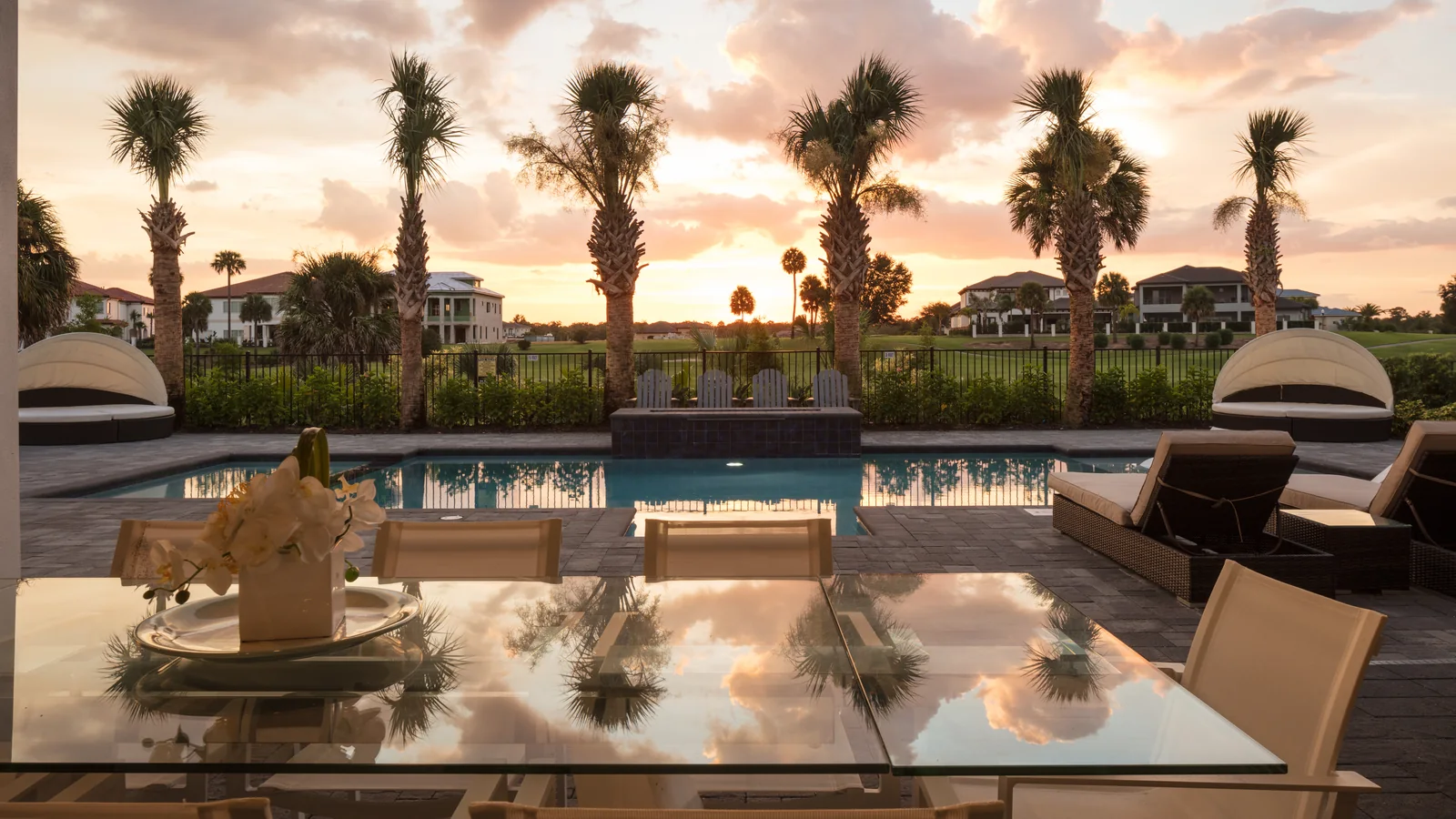
Palm Beach Gardens is a planned city, and the plan was golf. That gives it an unusual shape for South Florida: a small number of very large gated communities, most of them built around one or more courses, separated by green space rather than by strip retail. Buyers arrive expecting to choose between golf courses. They almost always end up choosing between membership documents.
The courses are not what separates them
PGA National, BallenIsles, Mirasol, Old Palm, Frenchman’s Creek and Frenchman’s Reserve are the names that come up most. All of them are gated. All of them have golf. Beyond that they diverge on things that matter far more to how you will actually live there, and the golf is the least of it.
What actually differs:
- Scale. Some are effectively small towns with thousands of homes and several courses. Others are a few hundred homes around one. That single fact changes the density of your street, how long the waiting list for a tee time is, how much of the budget any one household carries, and whether you will know your neighbours.
- Whether membership is mandatory. In some communities joining the club is a condition of buying. In others the club exists and joining is optional, and the house and the club are separate decisions. This is the single largest financial difference between two otherwise similar homes.
- Equity or non-equity. An equity membership is an ownership interest, usually with a defined process for getting some or all of it back when you leave, and usually with a queue. A non-equity membership is a right to use, and it is not an asset. They are priced differently and they behave completely differently on exit.
- Membership tiers. Most of these communities sell golf, sports and social memberships as separate categories, with separate costs and separate waiting lists. A family that will never play golf may be buying into a much cheaper arrangement than the community’s reputation suggests — or may be obliged to buy golf regardless.
- Age of the built stock. The Gardens spans several decades of construction. That drives roof age, window and impact-glazing status, and insurability, and those now shape what a buyer can finance more than almost anything cosmetic.
The reputation is a lagging indicator
Here is the trap, and it catches well-informed buyers. Membership structures get restructured. Communities convert between equity and non-equity, open or close categories, change what a new buyer is obliged to take, and rebuild clubhouses on assessments voted years before the work starts. A community that changed its rules keeps its old reputation locally for a long time afterwards.
So what a community required of a buyer three years ago is not evidence of what it requires today, and neither is what a friend who lives there remembers agreeing to when they bought in. The only reliable answer is the club’s current documents, on the day you offer.
Assessments: the number that is not in the asking price
Large club communities periodically spend large sums — a clubhouse, a course rebuild, a racquet complex, a new fitness building. Those are funded by assessment, and an assessment can be approved well before it is billed.
Which means a home can be on the market with a capital project already voted and not yet charged. The obligation typically follows the property. Ask directly, in writing:
- Is any assessment currently approved but not yet fully billed?
- Is any capital project under discussion that has not yet been voted?
- What are the club’s reserves against the projects it has scheduled?
- What is due at closing — initiation, equity contribution, capital contribution, transfer fee — and which of those, if any, is refundable?
The communities without a club
Palm Beach Gardens also has a substantial set of gated communities with no club obligation at all, and they are chronically overlooked. For a household that wants the city, the green space and the schools but does not play golf, they are frequently the better buy, because they are not carrying a share of a clubhouse in every monthly payment.
Alton and the newer construction are a third category again. There the things to read are the builder warranty, the phased-completion schedule and the special-district assessments, rather than resale comparables that do not exist yet in any depth.
The order I would do this in
Decide whether you will genuinely use a club before you tour a single one. It is the question that sorts the entire city, and it is much easier to answer honestly in a kitchen than standing on a terrace at sunset. Then narrow on scale — small and knowable, or large and full of things to do. Then, and only then, read the membership documents for the two or three that survive.
Done in that order this is a straightforward decision. Done in the reverse order, it is six months of touring and a purchase made on a feeling about a clubhouse.